
Longarm
since.
Classes are given so we can complete our own larger quilted items.
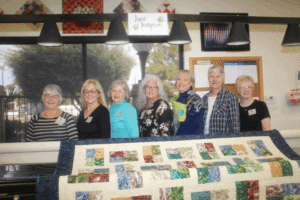
Coordinator and Monitors (left to right)
Del Nelson, Vicky Baumeister, Pat Alberts (coordinator), Paula Henkel, Denese Marshall, Julie Burzlaff and Sharon Morris
since.
Classes are given so we can complete our
OVERVIEW
since.
Classes are given so we can complete our
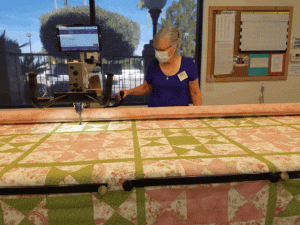
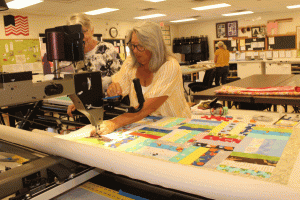
Lucie Longarm, our Gammill Vision 2.0 longarm quilting machine, was installed during the 2017-2018 season and has been busy ever since.
Classes are given so we can complete our own larger quilted items.since.
Classes are given so we can complete our own larger quilted items.since.
Classes are given so we can complete our own larger quilted items.

KEEP RUNNING SMOOTHLY
- Proper operation and maintenance are very important and will be done by each one that uses the machine
- Bobbin cases are easily damaged if dropped, so use them with care.
- A new needle is needed for every large quilt or a couple of small quilts.
- Our policy is that each person will purchase a kit for their personal use that contains a bobbin case, 5 bobbins and a package of 10 needles.
STEPS TO GET STARTED
- Take a half day class
- Purchase the kit
- Sign up on the Longarm board to quilt a quilt with an experienced buddy
- Consider being a buddy in the future

PREP YOUR QUILT
- Backing needs to be 8″ wider and 8″ longer than the quilt top (4″ around all sides)
- Batting width should be a little less in size than backing (2″ on each side)
- Top and backing need to be squared
- Do not leave selvages in seams of backing
- Seams should be horizontal
- All outside seams of the quilt top need to be backstitched
PREP FOR SCHEDULED TIME
- Have your quilt top and backing pressed
- Have backing and batting cut to size
- Have your quilting design selected
- Have bobbins wound (3-4 for queen size quilt)
- Mark centers of top and bottom of backing, also top centers of batting and pieced quilt top